
Featured guide
Track Audio File Changes Before Publishing
Keep source, edit, approval, quality, and rollback notes so public audio changes can be checked later.
Read the guide
Cinch Audio Recorder Journal
Clear, tested guidance for recording streaming music, saving radio, sorting tags, choosing formats, and getting the details right.
Featured guide
Keep source, edit, approval, quality, and rollback notes so public audio changes can be checked later.
Read the guide Compare browser recording, desktop recording, and format choices before a long session.
FixStart with silence, wrong-device capture, browser audio issues, and missing metadata.
OrganizeClean up formats, tags, artwork, filenames, and library folders after capture.
ExploreUse the solution hub to move from recording setup to source-specific guides and file cleanup.
Keep source, edit, approval, quality, and rollback notes so public audio changes can be checked later.
Read this guide Track audio edits, file replacements, format changes, approvals, and rollback notes so later teams know what changed.
Read this guide Prepare customer confirmation audio that proves the fixed section, keeps private details out, and asks one clear yes/no question.
Read this guide Inventory embedded audio before redesigns, migrations, refreshes, audits, and public page cleanup.
Read this guide Package audio bug evidence with steps, sample clips, expected results, actual results, and source-safe notes.
Read this guide Verify playback, metadata, file size, source copy, and rollback options before accepting or publishing an audio fix.
Read this guide Find audio that may be outdated, permission-limited, replaced, broken, or no longer safe for public use.
Read this guide Turn a resolved audio issue into a helpful FAQ entry with checked examples, clear symptoms, safe wording, and next steps.
Read this guide Organize the source file, final copy, old version, test evidence, and archive notes before closing an audio fix.
Read this guide Write an audio fix follow-up reply with confirmed file, checked playback, safe wording, retry steps, and escalation notes.
Read this guide Record what changed in an audio fix, which file was replaced, who approved it, and how to roll back if needed.
Read this guide Turn a closed fix into prevention notes, article updates, support changes, and repeatable checks.
Read this guide Rank audio fixes by user impact, playback risk, source clarity, replacement effort, and publication urgency.
Read this guide Use a practical checklist before replacing live audio files, including playback, links, metadata, file size, and rollback copies.
Read this guide Write a status update that tells people whether to retry, wait, use a workaround, or stop using a file.
Read this guide Prepare approval workflow audio by separating draft, review, approved, rejected, and public-use copies before sharing.
Read this guide Triage broken audio playback reports, separate file failure from delivery failure, and prepare safe replacement copies.
Read this guide Turn audio bug evidence into short, clear clips your team can review, share, and act on without exposing private customer files.
Read this guide Organize audio complaints into clear evidence for playback issues, access blockers, missing metadata, and follow-up timing.
Read this guide Prepare audio files for owner review before public pages, downloads, proof clips, or updates go live.
Read this guide Review live audio before refreshing a page, claim, product section, tutorial, or customer proof example.
Read this guide Turn customer interview audio into safer notes by separating quotes, workflow confusion, setup blockers, and evidence that needs consent.
Read this guide Sort customer audio clips by consent, proof point, expiry, and public-use limits before using them in sales or marketing.
Read this guide Prepare customer reference audio that answers one prospect question while preserving permission limits and speaker context.
Read this guide Review downloadable audio before changing public links, buttons, files, formats, or page attachments.
Read this guide Collect setup, access, and playback evidence so implementation teams can see what failed and who owns the fix.
Read this guide Review whether an audio sample really supports a claim before using it on a landing page, ad, or sales deck.
Read this guide Review audio size, format, duration, playback, and delivery copies before a public page gets heavier.
Read this guide Prepare permission review audio by naming the exact use, audience, restrictions, expiration, and approved delivery copy.
Read this guide Check public audio after publishing, including playback, source notes, page context, size, and replacement status.
Read this guide Organize customer audio feedback into useful clips for distortion, metadata, splitting, access, and speed issues.
Read this guide Prepare proposal audio attachments that support one proposal claim, stay private-safe, and avoid overpromising from one sample.
Read this guide QA public page audio by checking permission, claim fit, metadata, download behavior, playback, and replacement triggers.
Read this guide Review published and archived audio each quarter, checking playback, ownership, source notes, replacements, and risks.
Read this guide Create short remote support audio clips that show the exact issue, protect private details, and give technicians enough context.
Read this guide Review audio before removal by checking usage, replacement status, source notes, permission changes, and retired-file risk.
Read this guide Review audio that appears on several pages, so reused clips stay accurate, traceable, and current.
Read this guide Plan replacement audio by recording why the old file changed, what replaces it, and where references must be updated.
Read this guide Prepare rollback-ready audio copies before replacing public files, embeds, downloads, or proof clips.
Read this guide Keep audio source traceability by linking public clips to source files, excerpt timestamps, permission scope, and replacement history.
Read this guide Review audio on staging pages before publishing public embeds, downloads, samples, or proof clips.
Read this guide Turn scattered audio issues into short review clips with context, risk notes, owners, and next decisions.
Read this guide Prepare testimonial review audio that preserves speaker meaning, permission scope, quote context, and public-use approval status.
Read this guide Prepare Voice of Customer report audio by turning raw clips into themed evidence with privacy, trend, and action labels.
Read this guide Prepare audio files before a website migration, CMS rebuild, static-site move, or page URL change.
Read this guide Refresh a help article after an audio fix with checked examples, updated steps, safe labels, and proof that the file works.
Read this guide Prepare a fast replacement copy with proof, rollback notes, clean metadata, and follow-up review.
Read this guide Triage public audio incidents, preserve evidence, choose the right fix, and close with rollback notes.
Read this guide Turn vague playback complaints into a clear issue intake log with file identity, evidence, priority, and next action.
Read this guide Explain an audio issue with affected files, user impact, temporary guidance, owner, and review timing.
Read this guide Build a small audio monitoring sample set with trusted files, expected results, playback checks, labels, and review timing.
Read this guide Hand off audio files with owner notes, source status, version labels, quality checks, and next actions.
Read this guide Set up a manual playback monitoring checklist for public audio, downloads, embeds, and replacement files.
Read this guide Confirm public audio still plays after a rollout by checking links, file identity, playback, owners, and rollback status.
Read this guide Stop repeat audio problems with source rules, playback checks, labels, owners, and replacement proof.
Read this guide Keep useful audio, separate sources from copies, record retention reasons, and retire unclear files safely.
Read this guide List risky audio files, classify playback, source, permission, size, owner, and replacement issues before cleanup.
Read this guide Separate source, export, metadata, page, size, and playback causes before deciding how to fix an audio problem.
Read this guide Build a self-service audio troubleshooting path with symptoms, first checks, example files, safe fixes, and support handoff.
Read this guide Update support macros after an audio fix with checked wording, correct links, sample guidance, and escalation notes.
Read this guide Prepare temporary audio workarounds that solve an immediate problem without hiding source limits, ownership, or replacement timing.
Read this guide Choose the right backup, verify playback, rebuild labels, and restore without overwriting the source.
Read this guide Find, label, and retire outdated audio proof so old clips do not keep appearing in sales, support, or website workflows.
Read this guide Preserve family recordings, make safer listening copies, keep context, and label voices without overwriting originals.
Read this guide Balance podcast guest tracks by checking loudness, clipping, silence, clicks, and review-copy roles.
Read this guide Audit a messy audio folder, identify unknown files, flag risky recordings, and plan safer sorting before edits.
Read this guide 
Estimate recording time, file size, test capture quality, and avoid silent or incomplete long audio sessions.
Read this guide Choose the best audio copy by comparing source clues, duration, quality, waveform evidence, and intended use.
Read this guide Check quality, trim rough edges, remove silence, normalize volume, fix metadata, and know when to re-record.
Read this guide Estimate audio size, trim waste, choose MP3 settings, compress a sharing copy, and avoid sending broken audio.
Read this guide Convert voice notes to MP3 safely, test playback, preserve context, trim copies, and label files.
Read this guide Create honest audio preview clips with enough context, checked playback, clear levels, labels, and delivery copies.
Read this guide Create interview highlights that keep quote context, protect speaker intent, clean lightly, and label the clip.
Read this guide Decide whether audio is fixable or should be rerecorded by testing content, clipping, noise, levels, and purpose.
Read this guide Diagnose noisy audio by matching listening symptoms with waveform clues, spectrogram patterns, and safe test clips.
Read this guide Extract audio from video, verify the track, trim useful sections, choose format, and label the final copy.
Read this guide Inspect tags, fix verified fields, add cover art, and avoid labeling the wrong audio copy.
Read this guide Check stereo imbalance, rebalance left and right audio, convert to mono when needed, normalize, and verify playback.
Read this guide Check quiet recordings, trim noise, reduce hiss, normalize volume, boost carefully, and avoid clipping.
Read this guide Clean voice recordings, reduce steady noise, find mouth clicks, trim dead air, normalize volume, and check podcast balance.
Read this guide Write audio quality review notes with file identity, timestamps, listening impact, evidence, and next actions.
Read this guide Trim audio, check quality, generate waveform images or videos, and prepare cleaner visuals for posts, notes, or support.
Read this guide Make fair before-and-after audio comparisons with matched sections, equal context, notes, and safe copies.
Read this guide Make podcast clips with one clear point, fair context, checked speech, smooth edges, visuals, and labels.
Read this guide Turn one clear audio moment into a social post with the right clip, visual format, playback test, and sharing copy.
Read this guide Isolate a support audio problem, inspect file details, add waveform evidence, compress a copy, and explain what changed.
Read this guide Manage audio versions with source protection, role labels, review exports, comparison samples, and final checks.
Read this guide Level audio copies for steadier playback with source safety, realistic listening tests, and clear labels.
Read this guide Choose a clean section, trim a recording, add fades, make a ringtone copy, and avoid harsh starts or wrong formats.
Read this guide Merge audio segments in order, check joins, fix rough edges, level the copy, and label the final file.
Read this guide Organize music practice files with BPM/key notes, section clips, speed copies, labels, and source safety.
Read this guide Organize radio show recordings with preserved masters, section splits, pacing-safe trims, labels, and listening copies.
Read this guide Plan voiceover ducking so narration stays clear, music supports the message, and small-speaker tests pass.
Read this guide Estimate recording time, file size, bitrate tradeoffs, test captures, and backup space before a long session.
Read this guide Prepare an audio backup folder with source protection, playback checks, size planning, and clear copy roles.
Read this guide Plan audio folder cleanup with originals, review copies, duplicates, storage estimates, and safer labels.
Read this guide Prepare transcript audio with preserved context, cleaner sections, speaker labels, and reviewer notes.
Read this guide Create approved audio clips for affiliates with usage limits, public-safe samples, and clear claims they can repeat.
Read this guide Prepare Bluetooth speaker copies with realistic room tests, checked levels, smoother starts, and safer exports.
Read this guide Create a short bug report audio sample with one symptom, expected result, actual result, timestamp, and safe file details.
Read this guide Prepare case study audio with permission, context, fair comparison clips, and public-safe copies for the final page.
Read this guide Prepare audio review copies with trimmed sections, clear labels, consistent level, lightweight files, and review notes.
Read this guide Prepare cloud-shared audio with source, review, delivery, and final folders so recipients open the right file safely.
Read this guide Prepare community post audio that asks one clear question while protecting private voices, metadata, and source context.
Read this guide Prepare comparison page audio that is fair, matched, labeled, and honest about what each sample can actually prove.
Read this guide Summarize customer audio problems for CRM records without exposing private clips, account details, or unclear evidence.
Read this guide Clean up customer check-in audio so support, success, and product teams can understand the issue and next step.
Read this guide Prepare customer training audio that teaches one task at a time, with lesson evidence, privacy boundaries, and review status.
Read this guide Create a safe demo audio reply with one proof clip, clear context, and no private or misleading source material.
Read this guide Prepare audio test copies for phones, laptops, speakers, car stereos, earbuds, and upload forms without risking originals.
Read this guide Prepare download page audio that stays understandable after saving, with clear purpose, metadata, format, and privacy checks.
Read this guide Prepare help desk ticket audio that preserves the issue, removes private clues, and gives support reproducible evidence.
Read this guide Prepare knowledge base audio downloads that remain useful after download, with safe examples, version labels, and support context.
Read this guide Prepare landing page audio that loads quickly, proves one point, avoids overclaims, and stays safe for public use.
Read this guide Prepare localization review audio with language context, timing cues, pronunciation checks, and safe section labels.
Read this guide Prepare audio for messaging apps with shorter clips, safer formats, clearer levels, smaller files, and labels.
Read this guide Prepare audio for newsletters with short clips, clear labels, practical file size, checked playback, and safer source handling.
Read this guide Make voice, lessons, clips, and playback copies easier to hear in cars, kitchens, workshops, or other noisy rooms.
Read this guide Make family voices, lessons, interviews, and spoken audio easier to follow with clearer copies and fewer rough edges.
Read this guide Prepare onboarding email audio with short examples, checked playback, safe labels, practical size, and clear next-step context.
Read this guide Make voice, music, and clips easier to hear on phone speakers without harsh boosting or distorted mono playback.
Read this guide Trim presentation audio, level speech, add fades, convert format, compress file size, and prepare a clean playback copy.
Read this guide Choose approved press kit audio, remove private material, and add clear usage notes for journalists.
Read this guide Prepare product update audio that proves one release change without confusing QA samples, customer issues, or marketing claims.
Read this guide Build stable audio test samples with expected output, defect labels, and repeatable checks for future QA runs.
Read this guide Prepare QR code audio that works on phones with fast starts, practical size, clear context, and tested final links.
Read this guide Prepare renewal email audio that proves value while avoiding private account details, unfair comparisons, and unsupported claims.
Read this guide Package reviewer audio with clean metadata, approved proof clips, claim limits, and a simple listening order.
Read this guide Prepare short approved audio samples that answer buyer questions about sound quality, setup, metadata, or playback problems.
Read this guide Create a short follow-up audio sample that answers one buyer question with context, consent, and a clear next step.
Read this guide Prepare audio for school submission with clear speech, trimmed sections, compatible format, smaller size, and labels.
Read this guide Prepare short ad audio with fast starts, clear voice, clean endings, practical file size, and review-ready labels.
Read this guide Prepare support article audio examples that teach one issue safely, using recreated samples when customer evidence should stay private.
Read this guide Create short reproducible audio samples for escalation with expected results, actual results, timestamps, and safe context.
Read this guide Prepare a support reply audio clip that proves one point, protects private context, and tells the customer what to check next.
Read this guide Prepare team review audio with short context clips, version labels, quality checks, waveform notes, and safe copies.
Read this guide Check speech before transcription, trim unrelated audio, keep speaker context, reduce steady noise carefully, and label upload copies.
Read this guide Prepare troubleshooting email audio that shows one reproducible symptom, protects private labels, and tells support where to listen.
Read this guide Prepare tutorial page audio that matches one lesson step, teaches the expected result, and avoids private or misleading examples.
Read this guide Prepare audio for upload forms with checked duration, cleaner starts, safer formats, smaller copies, and clear filenames.
Read this guide Prepare website audio embeds with trimmed clips, clear levels, useful metadata, waveform visuals, and smaller delivery copies.
Read this guide Prepare an audio handoff package with clean copies, notes, labels, short samples, and files teammates can actually review.
Read this guide Prepare audio portfolio samples with focused clips, clear levels, useful labels, waveform visuals, and smaller files.
Read this guide Prepare an audio sample pack with selected clips, consistent levels, clear names, metadata, and smaller copies.
Read this guide Prepare audiobook listening copies with chapter splits, natural pauses, safer volume, speed versions, and labels.
Read this guide Trim background music, make clean loops, add fades, normalize level, convert format, and prepare safe playback copies.
Read this guide Prepare calmer bedtime audio copies with trimmed starts, tamed spikes, gentle fades, and safer playlist order.
Read this guide Prepare recorded audio for car USB playback with format conversion, tag fixes, volume checks, mono copies, and test folders.
Read this guide Check event audio, trim cues, normalize playback level, add fades, convert format, estimate size, and test copies.
Read this guide Inspect field recordings, trim useful moments, reduce steady noise carefully, normalize copies, add fades, and label locations.
Read this guide Trim language audio, slow difficult sections, remove safe silence, normalize speech, split lessons, and label practice copies.
Read this guide Check lecture audio, trim dead time, remove safe silence, split sections, adjust speed, and label study files.
Read this guide Check meeting audio, trim useful sections, remove safe silence, split topics, normalize speech, and label review copies.
Read this guide Prepare mono-compatible audio copies that keep important voice, music, and effects audible on one speaker.
Read this guide Trim lesson audio, clean obvious issues, split modules, normalize narration, add fades, and export course-ready copies.
Read this guide Make a safer private audio sharing copy with minimum context, checked playback, clean labels, and preserved source.
Read this guide Prepare product demo audio that proves one feature or outcome quickly without private source material or unfair loudness.
Read this guide Trim sleep audio, reduce sudden loud spikes, normalize level, remove rough noise, and make bedtime listening safer.
Read this guide Build a cleaner USB audio folder with readable names, safer MP3 copies, checked volume, and simple playback testing.
Read this guide Check voiceover audio, trim mistakes, reduce steady noise, normalize narration, add fades, and export video-ready copies.
Read this guide Prepare webinar replay audio with clean sections, preserved context, safer pauses, labels, and upload copies.
Read this guide Record a short audio message that is clear, trimmed, easy to open, and appropriate for the recipient.
Read this guide Shorten long audio for review by checking quality, trimming waste, removing safe dead air, and labeling copies.
Read this guide Sort songs by BPM and key with verified estimates, practice sections, speed copies, and safer labels.
Read this guide Turn one long recording into useful sections with quality checks, chapter splitting, trimming, naming, and metadata cleanup.
Read this guide Sync two recordings with shared cues, drift estimates, source-safe test clips, and start-middle-end checks.
Read this guide Sort unknown audio files by clues such as duration, metadata, waveform, quality, and safe review clips.
Read this guide Inspect audio metadata, check quality, view waveform clues, test format issues, and collect clear support evidence.
Read this guide Add cover art to recorded audio safely by checking the file first, choosing artwork, editing MP3 or FLAC tags, and saving a new copy.
Read this guide Prepare long audio recordings with the right source, format, sleep settings, storage check, notification control, and short test routine.
Read this guide 
Compare browser recording and system audio recording for tab audio, desktop app sound, long sessions, metadata, privacy, and troubleshooting.
Read this guide Use clear audio file naming patterns for recorded music, radio, lectures, webinars, playlists, versions, folders, and metadata cleanup.
Read this guide Pick a practical audio bitrate for voice, music, long recordings, editing copies, sharing, storage, and streaming-audio archives.
Read this guide Prepare recorded audio for car USB playback with practical checks for format, filenames, folders, stereo/mono, tags, and test copies.
Read this guide Use a practical podcast audio cleanup checklist for trimming, speaker balance, silence, volume, metadata, and final listening checks.
Read this guide Stop notification sounds from getting into recordings. Use a quiet setup checklist, browser checks, Windows alerts, and re-record decisions.
Read this guide Fix a recording saved as one long file. Review the audio, choose trim or chapter splitting, name segments, and avoid bad cuts next time.
Read this guide Fix recordings that stop early by checking sleep, power, storage, source playback, output devices, buffering, and repeatable test evidence.
Read this guide Use a short preflight recording to check source audio, device routing, volume, file location, format, silence, clipping, and metadata before a long session.
Read this guide Fix a recording saved as the wrong audio format. Learn when conversion is enough, when to re-record, and how to protect the original file.
Read this guide Choose MP3, WAV, FLAC, or M4A for recorded audio based on listening, editing, archiving, metadata, storage, and playback needs.
Read this guide 
Fix browser recordings with no audio by checking tab sound, output devices, browser routing, hardware behavior, and short test files.
Read this guide Fix system-audio detection problems by checking the active output, recording device, Stereo Mix expectations, virtual cables, and app routing.
Read this guide Fix missing song metadata by checking the recording first, improving the sample, retrying identification, editing tags, and replacing cover art.
Read this guide Fix silent recordings by checking the playback device, recorder source, browser output, Bluetooth switching, protected playback, and test files.
Read this guide Compare online audio recorders and desktop recorders for browser audio, streaming music, long sessions, metadata, cleanup, and support.
Read this guide Build a cleaner recorded music library by checking playback, filenames, metadata, artwork, lyrics, formats, folders, and backup copies.
Read this guide Record audio and keep the file useful afterward by checking title, artist, cover art, lyrics, filename patterns, and export format.
Read this guide Record clean browser audio from Chrome, Edge, or Firefox with fewer silent files, notification sounds, and device-routing surprises.
Read this guide 
Record online radio, web streams, and long listening sessions with fewer interruptions, better filenames, and cleaner post-recording review.
Read this guide Record Spotify playback into cleaner files by testing the audio route, avoiding notification sounds, and checking tags before a long session.
Read this guide Record YouTube audio more cleanly by controlling browser sound, testing the output device, and checking the saved file before a long session.
Read this guide Turn a usable recording into an organized audio file: choose a format, check metadata, fix names and cover art, and keep a sensible archive copy.
Read this guide Make your first system-audio recording dependable: check the right device, prevent notification sounds, test playback, and diagnose common failures.
Read this guide Missing Stereo Mix on Windows 10 or 11? Learn three practical ways to record internal audio with Cinch, Audacity WASAPI, and virtual cable options.
Read this guide 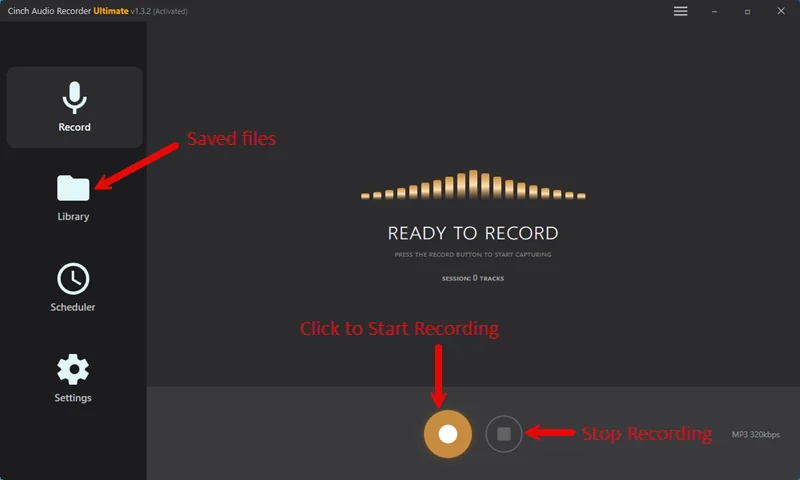
Learn how to record clean streaming audio with loopback tools, virtual cables, or Cinch Audio Recorder while avoiding silence, noise, and bad exports.
Read this guide The Cinch approach
Each article is written to help readers solve a real audio-saving problem first, then understand where Cinch Audio Recorder fits when they need a cleaner desktop workflow.